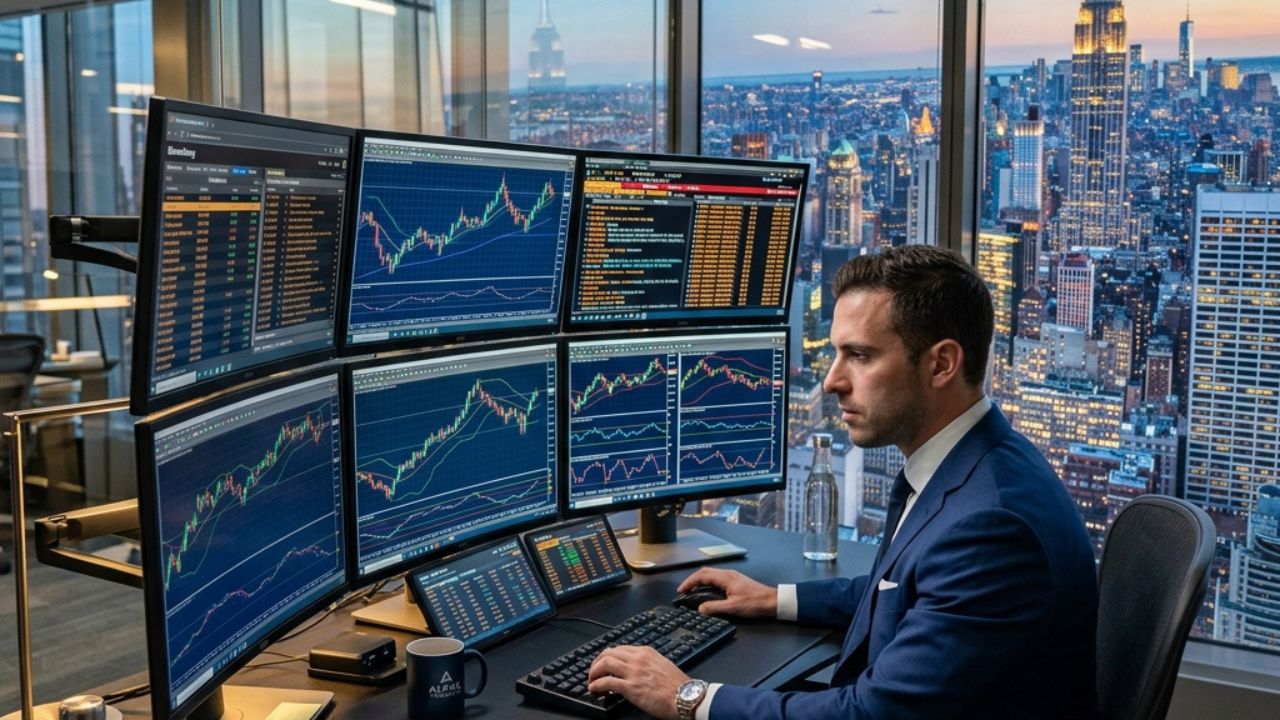
Professional Forex traders in America rely on strict risk management, algorithmic trading, and deep understanding of market fundamentals. Success requires navigating stringent US regulations by trading through brokers approved by the Commodity Futures Trading Commission (CFTC) and the National Futures Association (NFA), while keeping leverage capped at 50:1 for major currency pairs.
Forex trading in the United States operates under some of the most rigorous financial frameworks in the world. Professional traders navigate a unique environment that demands discipline, advanced technical knowledge, and a thorough understanding of regulatory constraints. Unlike international markets that offer massive leverage and lax oversight, the US market is designed to protect market participants while fostering a transparent trading ecosystem.
Succeeding in this environment requires more than just guessing currency movements. Professional traders rely on a combination of macroeconomic analysis, algorithmic execution, and ironclad risk management protocols. They also spend considerable time vetting the platforms they use to execute trades. The broker a trader selects directly impacts their execution speed, spread costs, and overall profitability.
Finding the right broker involves evaluating execution quality, software reliability, and regulatory standing. For US residents, the options are limited but highly secure. This guide breaks down the regulatory environment, highlights the top brokerages, and outlines the advanced techniques professionals use to generate consistent returns in the foreign exchange market.
Why is the regulatory landscape critical for US Forex brokers?
The United States maintains a highly regulated foreign exchange market. Two primary organizations oversee this sector: the Commodity Futures Trading Commission (CFTC) and the National Futures Association (NFA). These bodies enforce rules that ensure brokers maintain adequate capital reserves, operate transparently, and treat clients fairly.
Operating as a Forex broker in the US requires holding a Retail Foreign Exchange Dealer (RFED) license. The CFTC mandates that brokers maintain at least $20 million in operating capital. This strict requirement prevents underfunded organizations from opening shop and protects traders from broker insolvency.
Additionally, the NFA enforces strict leverage limits. According to NFA rules, retail traders can access a maximum leverage of 50:1 on major currency pairs and 20:1 on minor currency pairs. The NFA also enforces the “First In, First Out” (FIFO) rule, which requires traders to close the oldest open position in a currency pair before closing newer positions of the same size. Professional traders must adapt their hedging and scaling strategies to comply with these specific US regulations.
Who are the top Forex brokers for US traders today?
Because of the steep regulatory requirements, only a handful of brokers legally accept US clients. These brokers offer robust trading platforms, competitive spreads, and excellent liquidity.
What features does IG offer US traders?
IG is one of the largest retail Forex brokers globally and holds full regulatory approval in the US. The platform is known for its comprehensive educational resources and deep liquidity pools. IG offers competitive spreads, often dropping below 1 pip on major pairs like the EUR/USD. Professional traders favor IG for its advanced charting tools, seamless integration with MetaTrader 4 (MT4), and reliable execution speeds during volatile news events.
How does OANDA cater to professional investors?
OANDA is a pioneer in the retail Forex industry and remains a top choice for US professionals. The broker stands out by offering no minimum deposit requirements and allowing traders to execute trades in micro-lots. OANDA’s proprietary v20 trading engine provides institutional-grade execution speeds. Furthermore, the platform integrates natively with TradingView, giving technical analysts access to advanced charting features and custom indicators.
Why is Forex.com a popular choice for high-volume traders?
Forex.com, a subsidiary of StoneX Group Inc., provides a highly stable trading environment for US residents. The broker offers a tiered pricing structure that benefits high-volume traders through reduced commission costs. Forex.com users can choose between standard accounts with zero commissions and wider spreads, or raw spread accounts that charge a flat commission for institutional-grade pricing. The broker also provides access to Advanced Trading, a proprietary desktop platform built for algorithmic trading and complex technical analysis.
How should a US trader choose the best Forex broker?
Selecting a Forex broker requires aligning the platform’s features with your specific trading style, budget, and experience level.
How does trading style impact broker selection?
Day traders and scalpers need brokers that offer tight spreads and lightning-fast execution. If your strategy involves opening and closing dozens of positions per day, you should prioritize raw spread accounts to minimize transaction costs. Conversely, position traders who hold assets for weeks or months care less about intraday spreads and more about overnight swap rates. You should review a broker’s rollover fees to ensure long-term positions do not drain your capital.
What budget considerations matter most?
Your starting capital dictates which broker and account type you can effectively use. High-volume commission accounts typically require larger initial deposits but offer significant savings over time. If you are trading with a smaller account balance, a standard account with no commissions and slightly wider spreads might be more cost-effective. Additionally, check for inactivity fees and withdrawal costs, as these administrative charges can slowly erode your profitability.
Which platforms match your experience level?
Beginner traders generally prefer intuitive, web-based platforms with built-in educational guides. Professional traders demand advanced platforms like MetaTrader 4, MetaTrader 5, or NinjaTrader. These advanced terminals support custom coding, automated trading robots (Expert Advisors), and complex backtesting environments. You should always test a broker’s platform using a demo account to ensure it meets your technical requirements before committing real funds.
What advanced trading strategies do US professionals use?
Professional traders do not rely on a single approach. They deploy multiple strategies based on current market volatility, economic cycles, and geopolitical events.
How does algorithmic trading work in Forex?
Algorithmic trading involves using computer programs to execute trades based on pre-defined criteria. US professionals use platforms like MT4 or specialized APIs to deploy algorithms that monitor multiple currency pairs simultaneously. These programs can detect minor price inefficiencies and execute trades in milliseconds. Algorithmic trading removes emotional decision-making from the process and allows traders to backtest their strategies against decades of historical data.
What is the role of fundamental macroeconomic analysis?
While retail traders often focus exclusively on charts, professionals pay close attention to macroeconomic indicators. They track central bank interest rate decisions, non-farm payroll reports, and inflation data. For example, if the US Federal Reserve signals an upcoming interest rate hike, professional traders will adjust their portfolios to capitalize on a strengthening US dollar. This strategy, often called position trading, requires a deep understanding of global economics and patience to let long-term trends develop.
How do professionals utilize swing trading?
Swing trading captures medium-term price movements over a period of days or weeks. Professionals use technical analysis to identify support and resistance levels, trend lines, and moving average crossovers. By combining these technical indicators with market sentiment data, swing traders enter positions at the beginning of a new price wave and exit before momentum fades. This approach requires less screen time than day trading while still generating consistent opportunities.
How do professional Forex traders manage financial risk?
Capital preservation is the most important skill in professional trading. Without strict risk management, even the most accurate trading strategy will eventually fail due to inevitable losing streaks.
Professionals adhere to the 1% rule, meaning they never risk more than 1% of their total account equity on a single trade. If a trader has a $100,000 account, their maximum loss on any given position will not exceed $1,000. They enforce this rule by using guaranteed stop-loss orders and calculating their position size meticulously before entering the market.
Leverage management is another critical component. While US brokers offer up to 50:1 leverage, professionals rarely maximize this allowance. High leverage amplifies both profits and losses. Professional traders adjust their leverage based on market volatility, reducing their exposure during highly unpredictable events like elections or central bank announcements. They also maintain a favorable risk-to-reward ratio, ensuring that their potential profit on a trade is at least twice as large as their potential loss.
Securing your future in the US Forex market
Navigating the US Forex market requires dedication, continuous learning, and a disciplined approach to capital allocation. By understanding the regulatory environment, you can confidently select a CFTC-regulated broker that aligns with your financial goals. Professional success depends on moving beyond basic indicators to embrace advanced strategies like algorithmic execution and macroeconomic analysis. Prioritize risk management above all else, protect your trading capital, and focus on long-term consistency over short-term windfalls.
Frequently Asked Questions (FAQ)
What is the maximum leverage allowed for US Forex traders?
The National Futures Association (NFA) limits retail Forex leverage to 50:1 for major currency pairs (such as EUR/USD and GBP/USD) and 20:1 for minor and exotic currency pairs.
Can US citizens use offshore Forex brokers?
US citizens are legally required to trade with brokers regulated by the CFTC and NFA. Using offshore, unregulated brokers exposes traders to significant financial risk and a lack of legal recourse if the broker becomes insolvent or engages in fraudulent activity.
How much money do I need to start trading Forex in the US?
While some brokers like OANDA have no minimum deposit requirement, professionals recommend starting with at least $1,000 to $5,000. This capital allows you to properly implement risk management rules and trade micro-lots without over-leveraging your account.
Are Forex trading profits taxable in the United States?
Yes, Forex trading profits are subject to taxation. Depending on your trading structure, they may be taxed under Section 988 (ordinary income) or Section 1256 (60% long-term and 40% short-term capital gains). You should consult a certified tax professional to determine the best filing status for your specific situation.