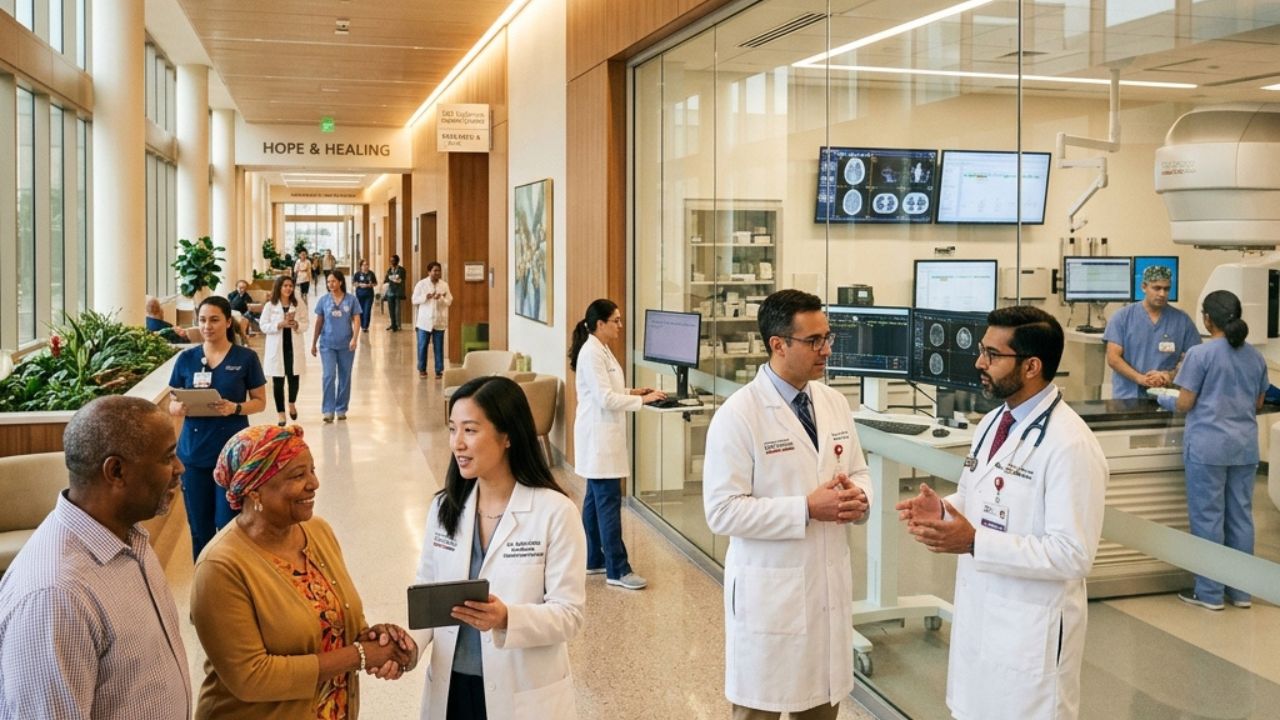
A cancer diagnosis brings a wave of complex emotions and tough decisions. Millions of Americans face this reality every year, navigating a medical landscape that is constantly evolving. The sheer volume of information can feel overwhelming. Finding the right medical team is one of the most critical steps in this journey, as the quality of care significantly impacts both survival rates and quality of life.
Choosing a hospital for cancer treatment requires careful thought and research. The right facility provides access to experienced specialists, advanced technology, and comprehensive support systems. Patients who receive treatment at specialized cancer centers often experience better outcomes. These institutions dedicate their resources entirely to understanding, treating, and eventually curing this complex disease.
What exactly makes a hospital top-tier for oncology? It comes down to a combination of cutting-edge research, a multidisciplinary approach to patient care, and a proven track record of success. Top hospitals do not just treat the disease. They treat the whole person, offering therapies and support services designed to address the physical, emotional, and psychological challenges of cancer. This guide will help you understand the landscape of top cancer hospitals in America and how to choose the right one for your specific needs.
Criteria for Evaluating Top Cancer Hospitals
When evaluating where to receive cancer treatment, you need to understand the benchmarks that separate good hospitals from exceptional ones. The top facilities share several defining characteristics.
Advanced Medical Technology and Treatment Options
Top cancer centers invest heavily in the latest medical technology. This includes advanced imaging machines for accurate diagnoses, precision radiation therapy tools, and state-of-the-art surgical suites. Access to these tools allows doctors to target tumors more precisely while sparing healthy tissue, leading to fewer side effects and better recovery times.
Multidisciplinary Approach to Care
Cancer is complex, and treating it effectively requires a team. The best hospitals use a multidisciplinary approach. Your care team might include medical oncologists, radiation oncologists, surgeons, pathologists, and specialized nurses. These experts meet regularly to discuss your case and develop a coordinated, personalized treatment plan.
Patient Outcomes and Survival Rates
A hospital’s track record matters. Top institutions consistently report higher survival rates and better overall patient outcomes for various types of cancer. They track this data rigorously and use it to continuously improve their treatment protocols. High volume is also a key indicator; surgeons and oncologists who treat a high number of specific cancer cases tend to achieve better results.
Research and Clinical Trials
Leading cancer hospitals are also research powerhouses. They conduct extensive laboratory and clinical research to discover new ways to fight the disease. By receiving treatment at a research-driven hospital, patients gain access to clinical trials. These trials offer early access to groundbreaking therapies before they become widely available to the public.
Specialized Expertise and Subspecialties
Cancer is not a single disease, but hundreds of different diseases. Top hospitals feature specialists who focus on very specific types of cancer, such as neuro-oncology for brain tumors or gynecologic oncology for reproductive cancers. This hyper-focused expertise ensures that doctors are deeply familiar with the nuances of a specific diagnosis.
Patient Support Services and Holistic Care
Healing involves more than just medicine. Exceptional hospitals provide comprehensive support services. This includes nutritional counseling, pain management, physical therapy, psychological counseling, and social work services. These programs help patients and their families manage the stress and side effects of cancer treatment.
Accreditations and Recognitions
Look for hospitals designated as Comprehensive Cancer Centers by the National Cancer Institute (NCI). This prestigious designation means the facility meets rigorous standards for transdisciplinary research and advanced treatments. Other important recognitions include accreditations from the American College of Surgeons Commission on Cancer and high rankings from independent organizations like U.S. News & World Report.
Spotlight on Top Cancer Hospitals in America
Several institutions across the United States stand out for their exceptional cancer care. Here is a closer look at some of the leading hospitals setting the standard for oncology.
Memorial Sloan Kettering Cancer Center (New York, NY)
Founded in 1884, Memorial Sloan Kettering (MSK) is the world’s oldest and largest private cancer center. Its mission has always been singular: the progressive control and cure of cancer through programs in patient care, research, and education. MSK is renowned for its specialization in complex and rare cancers. The hospital utilizes innovative treatments, including personalized cancer vaccines and advanced robotic surgeries. Furthermore, MSK’s close integration of laboratory research and clinical care means that scientific breakthroughs move rapidly from the lab bench to the patient’s bedside.
MD Anderson Cancer Center (Houston, TX)
Located within the Texas Medical Center, MD Anderson is consistently ranked as one of the best cancer hospitals in the nation. It operates one of the most comprehensive cancer programs in the world. MD Anderson is highly regarded for its advanced proton therapy center, which delivers highly targeted radiation to tumors. The institution places a massive emphasis on research, running hundreds of clinical trials at any given time. This commitment ensures patients have access to the latest investigational drugs and therapeutic techniques.
Mayo Clinic Cancer Center (Rochester, MN; Phoenix/Scottsdale, AZ; Jacksonville, FL)
The Mayo Clinic is famous for its integrated approach to medicine. This collaborative philosophy extends to its cancer center, which operates across three main campuses. A patient at the Mayo Clinic benefits from a team of specialists who work seamlessly together to provide rapid diagnosis and treatment. The hospital shows immense strength in treating a wide variety of cancers, particularly complex surgical cases involving the brain, spine, and gastrointestinal tract. Their collaborative research efforts span across all campuses, bringing diverse medical minds together to solve difficult oncological problems.
Dana-Farber Cancer Institute (Boston, MA)
Affiliated with Harvard Medical School, Dana-Farber is a leader in cancer research and clinical care. The institute is globally recognized for its pioneering research, particularly in the development of targeted therapies. Dana-Farber provides world-class care for both adult and pediatric cancers, maintaining a close partnership with Boston Children’s Hospital. Beyond medical treatment, Dana-Farber excels in offering robust patient and family support programs, recognizing that a cancer diagnosis impacts the entire family unit.
Cleveland Clinic Cancer Institute (Cleveland, OH)
The Cleveland Clinic delivers comprehensive cancer care through its main campus and numerous regional locations. This network allows patients to access world-class treatment closer to home. The Cancer Institute focuses heavily on personalized medicine, using genetic profiling to match patients with targeted therapies. The Cleveland Clinic places a strong emphasis on quality metrics and patient safety, ensuring standard protocols are followed rigorously to achieve the best possible outcomes.
Johns Hopkins Kimmel Cancer Center (Baltimore, MD)
As part of a major academic medical center, the Johns Hopkins Kimmel Cancer Center is a hub of pioneering research and discovery. Scientists at Johns Hopkins mapped the first cancer genome, fundamentally changing how the medical world understands the disease. The center has notable strengths in treating pancreatic cancer, breast cancer, and prostate cancer. Patients benefit from an integrated care model where renowned researchers and expert clinicians work side-by-side.
City of Hope Comprehensive Cancer Center (Duarte, CA)
City of Hope blends groundbreaking research with deeply compassionate care. The institution has a unique focus on translational research, rapidly turning scientific discoveries into life-saving treatments. City of Hope is a global leader in bone marrow transplantation and CAR T-cell therapy, a revolutionary treatment that uses a patient’s own immune system to fight cancer. The hospital’s physical environment and supportive services are designed with the patient’s holistic well-being in mind.
Other Highly-Rated Cancer Centers
Several other institutions provide exceptional oncology care and deserve recognition.
- University of Pennsylvania Abramson Cancer Center: A pioneer in immunotherapy and home to the development of the first FDA-approved CAR T-cell therapy.
- Stanford Health Care – Stanford Cancer Institute: Known for translating Stanford University’s cutting-edge scientific discoveries into innovative clinical practices.
- Northwestern Medicine Robert H. Lurie Comprehensive Cancer Center: Offers extensive clinical trials and multidisciplinary care with a strong focus on community outreach and cancer prevention.
How to Choose the Best Hospital for Your Needs
Selecting a hospital is a highly personal decision. The right choice depends on your specific diagnosis, geographical location, and personal preferences.
Consulting with Your Primary Care Physician and Specialists
Start by talking to your primary care doctor and the specialist who diagnosed you. They understand your medical history and the specifics of your cancer. They can provide referrals to top hospitals and oncologists who specialize in your particular condition. Their professional networks are valuable resources for finding high-quality care.
Considering Location, Insurance, and Logistics
Practical considerations play a major role in your decision. Traveling across the country for treatment might not be feasible for everyone. Evaluate the logistics of frequent hospital visits, including travel time, lodging, and the availability of caregivers. Additionally, you must verify your health insurance coverage. Contact your provider to understand which cancer centers are in-network and what out-of-pocket costs you might incur.
Asking Key Questions During Consultations
When you meet with an oncologist at a prospective hospital, ask direct questions. Inquire about their experience treating your specific type of cancer. Ask about the hospital’s survival rates for your condition and what clinical trials might be available to you. You should also ask how the care team communicates with each other and with you throughout the treatment process.
The Importance of a Second Opinion
Never hesitate to seek a second opinion. A different doctor or a different hospital might offer an alternative treatment plan, access to different clinical trials, or simply a communication style that makes you feel more comfortable. Getting a second opinion is a standard practice in oncology. A reputable doctor will encourage you to explore all your options.
Advances in Cancer Treatment
The landscape of cancer treatment is moving forward rapidly. Top hospitals are at the forefront of these medical breakthroughs, offering patients new hope.
Immunotherapy and Targeted Therapies
Immunotherapy uses the body’s own immune system to recognize and attack cancer cells. This approach has led to remarkable recoveries in cases that were previously considered untreatable, particularly in melanoma and lung cancer. Targeted therapies work differently; they attack specific genes or proteins that help cancer cells grow and survive. These treatments often cause fewer side effects than traditional chemotherapy because they do not damage healthy, fast-growing cells.
Precision Medicine and Genomic Sequencing
Precision medicine tailors treatment to the individual characteristics of each patient’s tumor. Doctors use genomic sequencing to analyze the DNA of the cancer cells. By identifying the specific mutations driving the cancer’s growth, oncologists can prescribe drugs designed to target those exact abnormalities. This moves cancer care away from a one-size-fits-all approach toward highly customized treatment plans.
Minimally Invasive Surgery and Radiation Techniques
Surgical techniques have vastly improved. Many cancer surgeries can now be performed using minimally invasive laparoscopic or robotic techniques. These methods involve smaller incisions, leading to less pain, shorter hospital stays, and faster recovery times. Radiation therapy has also become much more precise. Techniques like stereotactic body radiation therapy (SBRT) deliver high doses of radiation to very small, well-defined tumors, sparing the surrounding healthy tissue.
Emerging Technologies and Future Outlook
The future of cancer treatment holds immense promise. Researchers are exploring the use of artificial intelligence to improve early detection by analyzing medical images with incredible accuracy. Scientists are also developing cancer vaccines designed to prevent the disease from returning. As top hospitals continue to push the boundaries of science, the focus remains on finding curative treatments and improving the quality of life for all cancer survivors.
Moving Forward with Hope and Confidence
A cancer diagnosis is undoubtedly challenging, but you have the power to influence your journey through informed decisions. Understanding the landscape of cancer care in America allows you to advocate for yourself and secure the best possible treatment.
Do your research, ask questions, and seek out the experts who specialize in your specific condition. The medical community continues to make remarkable strides against this disease every single day. Top cancer hospitals represent the absolute best of this progress, offering advanced treatments, dedicated specialists, and a profound commitment to your health. By choosing a facility that aligns with your medical needs and personal values, you can move forward with confidence and hope.